Top pick
3-Piece
Voice, melody and percussion for a society or wedding garba.
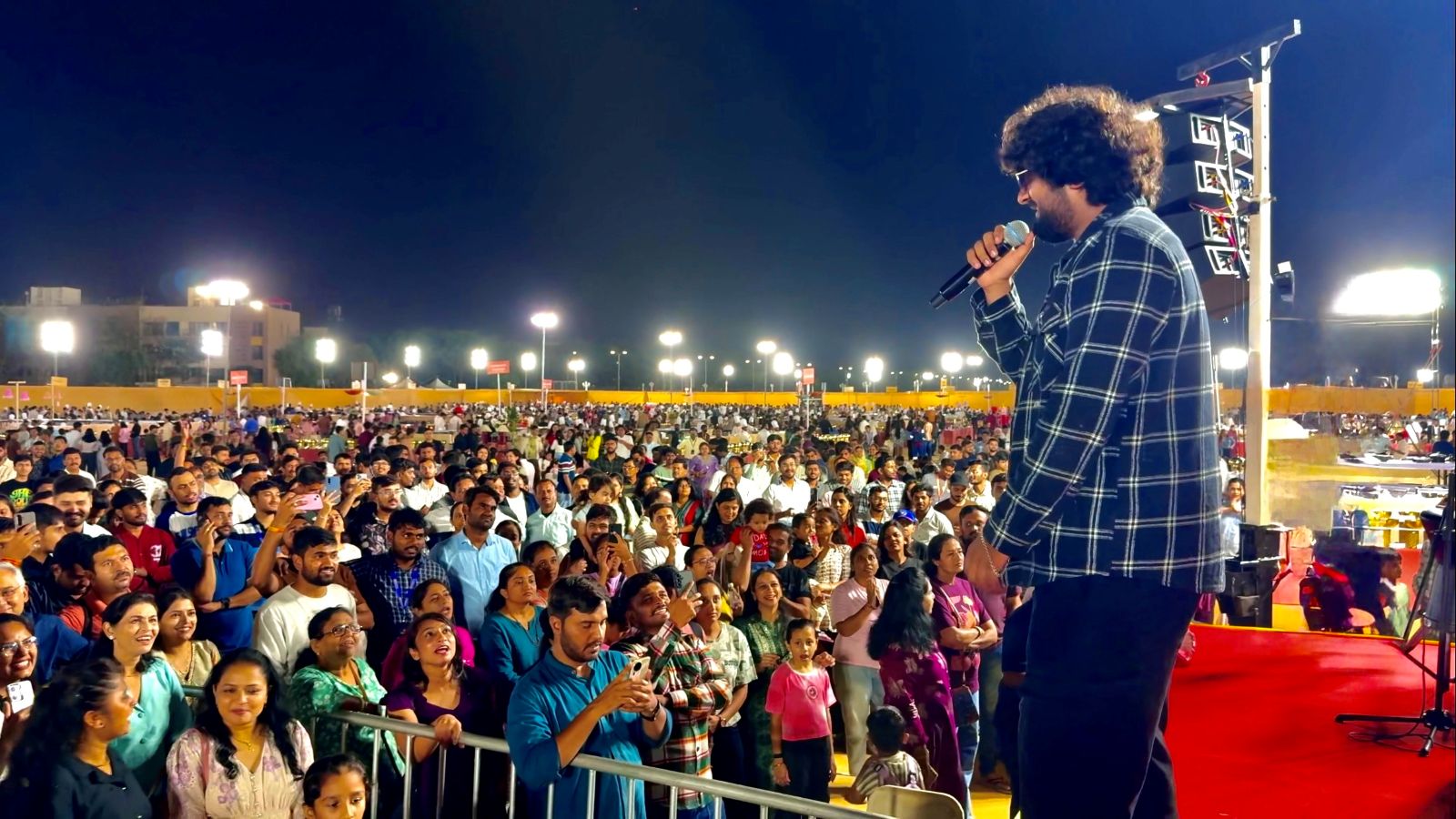
Mumbai · Garba & Dandiya Nights
Navratri is one of the biggest dates in Mumbai’s calendar, especially across the western suburbs where Gujarati communities fill large grounds and society compounds for nine nights.
Planning notes
A garba night depends on live music more than most events: the singer sets the tempo of the circle, and the dancers answer.
Dharmik was born in Dwarka, Gujarat, and garba and dandiya sit comfortably in the repertoire. A typical evening begins with an aarti and slower garba while the ground fills, builds through the traditional rounds and moves to faster dandiya raas in the second half. Popular film garba keeps younger dancers in the circle, so the same night works for grandparents and teenagers.
Planning notes for Mumbai
Navratri dates shift every year, and organisers book singers months ahead. Reserve a slot as soon as the committee has a ground and a rough night plan.
A large open ground needs a stage, monitors and speakers placed to carry across the circle. Agree who provides sound and who handles the generator before the first night.
Navratri events usually need local permissions, and loudspeaker timings are enforced. Plan the programme to finish within the permitted hours.
On location
Getting the music there
Dharmik lives in Mumbai, so there is no outstation travel to plan for events in the city.
See and hear it
Photos and reels are from Dharmik’s own shows. The songs below are the ones people ask for most at live music for a garba and dandiya night in Mumbai.
Tap a tile to watch or enlarge. The full gallery
Often asked for
A sample; the repertoire is on the media page.
Why Dharmik
Born in Dwarka, Gujarat — garba and dandiya are part of the repertoire.
Tempo and song order follow the dancers.
Traditional numbers for elders and film garba for the young.
A smaller band for a society event, a full band for a large ground.
Formats
Top pick
Voice, melody and percussion for a society or wedding garba.
4 musicians
A fuller sound for mid-size garba evenings.
6 musicians
The big-ground Navratri show with a stage.
How the night unfolds
A devotional start and slow garba as dancers gather.
Traditional and popular garba at a rising tempo.
Faster dandiya numbers once the sticks come out.
A big collective closing round.
How it works
Send the occasion, the date, the city, the venue and the number of guests on WhatsApp, or call. There are no forms to fill in.
Availability, the format that suits the room, from a solo singer to a full band, and the fee are agreed together. An advance holds the date.
Songs, timings, sound and power are settled in writing. For events away from the main office in Virar West, travel and stay are agreed here too.
The musicians arrive early, check the sound and perform. For remote events a short test session runs before the live stream.
Visit us
Main office · Maharashtra
Rajkot
Shop No. 324, Chandreshnagar Main Road, Mayani Chowk, Rajkot, Gujarat 360004 DirectionsDwarka
T.V. Station Area, Patel Samaj Road, Dev Bhumi Dwarka, Dwarka, Gujarat 361335 DirectionsPorbandar
Meera Shopping Center, First Floor, Kedareshvar Road, Porbandar, Gujarat 360575 DirectionsAhmedabad
Swaminarayan Park-1, Opp. Swaminarayan Park-2, New Vasna, Vishala, Ahmedabad, Gujarat 380007 DirectionsMumbai’s Navratri begins with the ghatasthapana on the first evening and runs for nine nights, each with its own colour that many families wear. The largest grounds are in the western and eastern suburbs, in Borivali, Kandivali, Malad, Ghatkopar and Mulund, where Gujarati communities are strongest, and big paid events draw tens of thousands to open grounds. Alongside them, hundreds of housing societies run their own smaller nights, and offices hold corporate evenings in the same weeks.
The nine nights follow a rhythm. The evening opens with the aarti of the goddess, a slow garba follows while the circles form, the dandiya raas takes over as the ground fills and the late hours belong to the faster rounds. The last nights, including Ashtami and the night before Dussehra, are the busiest.
A Mumbai ground is a long, loud, crowded space, and the singer has to hold it. That means sound that reaches the back of a ground of thousands without becoming harsh at the front, a stage placed where the circle can see it and a band that keeps the beat steady for hours. Organisers book months ahead, and the best nights, the weekends and the last three, are taken first.
Permissions come from the municipal corporation and the police, loudspeaker hours are set each year and silence zones near hospitals and schools are enforced. The set is built to finish at the permitted hour, with a high-energy closing round that does not run past it.
A Mumbai night mixes the traditional and the popular. Slow traditional garba songs, the folk numbers sung in Gujarati and the devotional songs to the goddess open the evening; popular film garba numbers and dandiya rhythms carry the middle; and the closing rounds are fast. Dharmik’s sets include all three, and the order is agreed with the organiser, with a request list from the committee if there is one.
Local FAQs
It can be discussed: some committees book a single night or the closing nights, others the full festival. Share the schedule and availability is checked.
Both. Traditional numbers form the core of the first half, with popular film garba mixed in to keep the whole ground dancing.
For a society compound of a few hundred, a three-piece or four-piece with percussion is usually enough; a large public ground needs a full band and a stage.
Borivali, Kandivali, Malad, Ghatkopar and Mulund have the biggest garba traditions.
The municipal corporation and the police; the organiser arranges them and confirms the permitted hours.
The weekends, Ashtami and the last three nights.
Check availability in Mumbai
No forms, no waiting on email — your message arrives pre-filled with the event details.
Ask about the music
AI assistant · for dates & pricing use WhatsApp